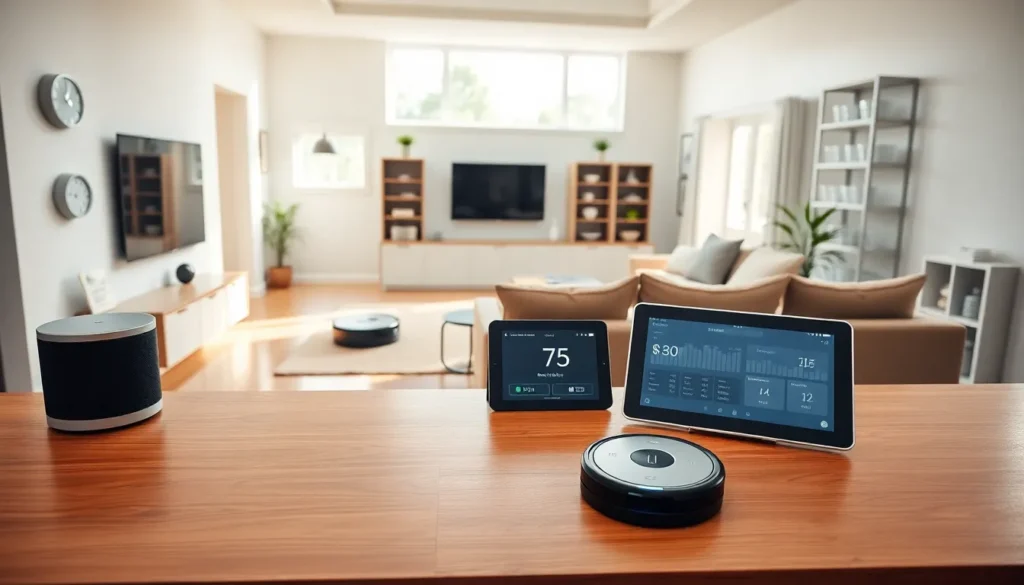
Top smart living tips can transform how people manage their homes, finances, and well-being. Modern technology and practical strategies make daily routines faster, cheaper, and less stressful. Whether someone wants to cut energy bills, automate household tasks, or build healthier habits, small changes add up to major improvements.
This guide covers proven smart living tips across five key areas. Readers will learn how to automate their homes, manage money with digital tools, boost health routines, reduce energy use, and create organized spaces. Each section offers actionable advice that anyone can apply right away.
Key Takeaways
- Smart living tips across home automation, finances, health, energy, and organization can save time, money, and reduce daily stress.
- Smart thermostats and LED bulbs offer quick wins—saving 10-15% on heating/cooling costs and 75% on lighting energy.
- Automating bill payments, savings transfers, and using budgeting apps removes the mental load of financial management.
- Wearable fitness trackers increase activity levels by up to 40%, making them powerful tools for building healthier habits.
- Decluttering with the one-in-one-out rule and digitizing paper documents creates organized, stress-free living spaces.
- Small, consistent changes—like 15-minute weekly decluttering or daily 5-minute meditation—compound into major lifestyle improvements.
Automate Your Home for Effortless Comfort
Home automation stands out among smart living tips for its immediate impact. Smart devices handle repetitive tasks, freeing up time and mental energy.
Start with a smart speaker or hub. Devices like Amazon Echo or Google Nest serve as central control points. They connect lights, thermostats, locks, and appliances into one system. Voice commands replace manual switches, “Turn off the living room lights” takes two seconds.
Smart thermostats pay for themselves. Products like the Ecobee or Nest Learning Thermostat adjust temperatures based on schedules and occupancy. The average household saves 10-15% on heating and cooling costs annually. That’s roughly $130-$150 per year back in your pocket.
Automate lighting for convenience and security. Smart bulbs and switches allow scheduling, dimming, and remote control. Set lights to turn on at sunset or simulate occupancy while traveling. Motion sensors add another layer, lights activate when someone enters a room and shut off when they leave.
Don’t overlook robot vacuums. A quality robot vacuum handles daily floor cleaning without supervision. Schedule it to run while at work, and come home to clean floors. Models from Roomba, Roborock, and Eufy range from budget-friendly to premium.
These smart living tips require some upfront investment, but the time savings compound daily.
Streamline Your Finances With Digital Tools
Financial management becomes easier with the right apps and automation. Smart living tips for money focus on reducing friction and eliminating manual tracking.
Use budgeting apps that sync automatically. Apps like YNAB, Mint, or Monarch Money connect to bank accounts and categorize transactions. Users see exactly where money goes without entering receipts. Visibility leads to better decisions.
Automate bill payments and savings. Set up autopay for recurring bills to avoid late fees and credit score damage. Schedule automatic transfers to savings accounts on payday, “pay yourself first” actually works when it’s automatic. Even $50 per paycheck adds up to $1,300 annually.
Track subscriptions ruthlessly. The average American spends $219 per month on subscriptions. Many forget about services they no longer use. Tools like Rocket Money or Truebill identify recurring charges and help cancel unwanted ones.
Consider high-yield savings accounts. Online banks often offer 4-5% APY compared to 0.01% at traditional banks. On $10,000, that’s the difference between $1 and $500 in annual interest. Moving idle cash takes minutes.
These smart living tips remove the mental load of money management. When finances run on autopilot, there’s less stress and more control.
Optimize Your Health and Wellness Routines
Health-focused smart living tips blend technology with habit formation. Small, consistent actions beat dramatic overhauls every time.
Wearable devices provide accountability. Fitness trackers and smartwatches monitor steps, heart rate, sleep quality, and activity levels. Seeing data motivates movement. Research shows people with trackers walk 40% more than those without.
Meal prep saves time and improves nutrition. Spending two hours on Sunday preparing lunches and dinners prevents weeknight fast food runs. Prep containers, a good knife, and a meal planning app make the process efficient. Apps like Mealime generate shopping lists automatically.
Prioritize sleep with a consistent schedule. Adults need 7-9 hours per night, yet 35% of Americans get less than 7. Smart living tips for sleep include keeping the bedroom cool (65-68°F), avoiding screens an hour before bed, and waking at the same time daily, even weekends.
Hydration apps send reminders. Dehydration causes fatigue, headaches, and reduced focus. Apps like WaterMinder or simple phone reminders prompt regular water intake throughout the day.
Mental health matters too. Meditation apps like Headspace or Calm offer guided sessions starting at just five minutes. Consistency beats duration, daily five-minute sessions outperform occasional 30-minute attempts.
These smart living tips build sustainable health habits without requiring willpower for every decision.
Reduce Energy Consumption and Save Money
Energy efficiency represents some of the most practical smart living tips available. Lower utility bills and reduced environmental impact go hand in hand.
Switch to LED bulbs immediately. LEDs use 75% less energy than incandescent bulbs and last 25 times longer. Replacing 10 bulbs saves approximately $75 annually. The upfront cost pays off within months.
Smart power strips eliminate phantom loads. Electronics draw power even when turned off. Smart strips detect when devices enter standby mode and cut power completely. This addresses 5-10% of residential electricity use.
Adjust thermostat settings strategically. Lowering heat by 1°F saves roughly 3% on heating bills. Program thermostats to reduce heating or cooling when nobody’s home. Smart thermostats learn schedules and optimize automatically.
Seal air leaks around windows and doors. Weatherstripping and caulk cost under $20 and prevent drafts that force HVAC systems to work harder. Check attic insulation too, proper insulation cuts heating costs significantly.
Run appliances during off-peak hours. Many utility companies charge less at night. Running dishwashers, washing machines, and dryers after 9 PM reduces electricity costs in areas with time-of-use pricing.
These smart living tips require minimal effort but deliver measurable monthly savings.
Declutter and Organize for a Stress-Free Space
Physical clutter creates mental clutter. Smart living tips for organization improve focus, reduce anxiety, and make daily routines faster.
Apply the one-in-one-out rule. For every new item that enters the home, one similar item leaves. This prevents accumulation and forces intentional purchasing decisions.
Use vertical storage solutions. Shelves, wall hooks, and over-door organizers maximize floor space. Small homes benefit especially from vertical thinking. Clear containers let people see contents without opening everything.
Digitize paper documents. Scanning apps like Adobe Scan or Microsoft Lens turn physical papers into searchable PDFs. Store them in cloud services like Google Drive or Dropbox. This eliminates filing cabinets and makes retrieval instant.
Create designated zones. Keys go in one spot. Mail gets sorted in one location. Charging stations keep devices organized. When everything has a home, finding items takes seconds instead of minutes.
Schedule regular decluttering sessions. Fifteen minutes weekly prevents buildup. Tackle one drawer, one shelf, or one category at a time. The goal isn’t perfection, it’s progress.
These smart living tips create environments that support productivity rather than distract from it.